

Every requirement, checked the moment it's written.
AI made engineering intent cheap to generate. Proving it's correct, consistent, and audit-ready is the new bottleneck.
QRA assures each requirement as it's authored, and the evidence that it's right accumulates as you work.

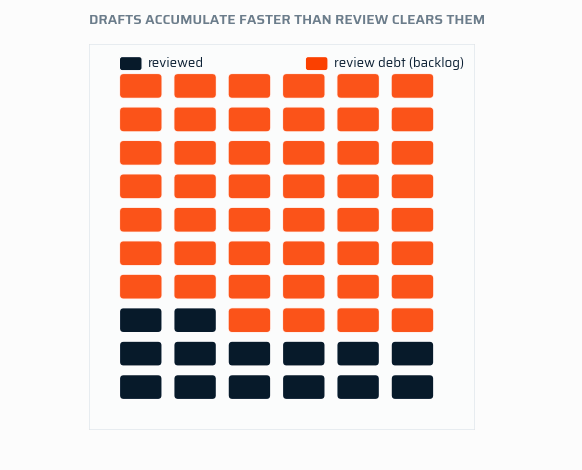
AI can generate requirements faster than engineers can review them.
More artifacts, faster, isn't a win if review is slow. It just creates work for the downstream team.
AI got very good at writing requirements. Proving each one is correct is a different job, and now the scarce one.
DOORS, Jama, and Polarion hold requirements. They don't check whether each one is consistent with the rest.
The generator and the evaluator should be separate. A deterministic judge is what makes a score defensible.
From first draft to governed artifact, without leaving your tools.
No new process, no migration. The QRA browser extensions (Chrome, Edge) and Microsoft Office add-ins deliver assurance where your requirements already live — DOORS Next, Jama, Polarion, Word, and Excel.
Evaluation agent · QVscribe
Scores every requirement 1–5 against your standard. Same input, same score, every time.
Suggestion agent · ReqWriter
Proposes a standards-conformant rewrite. You accept or reject every change.
An engineer writes a requirement
In the authoring tool they already use. QVscribe scores it 1–5 against your configured standard the moment it's written, and highlights the exact words behind every finding.
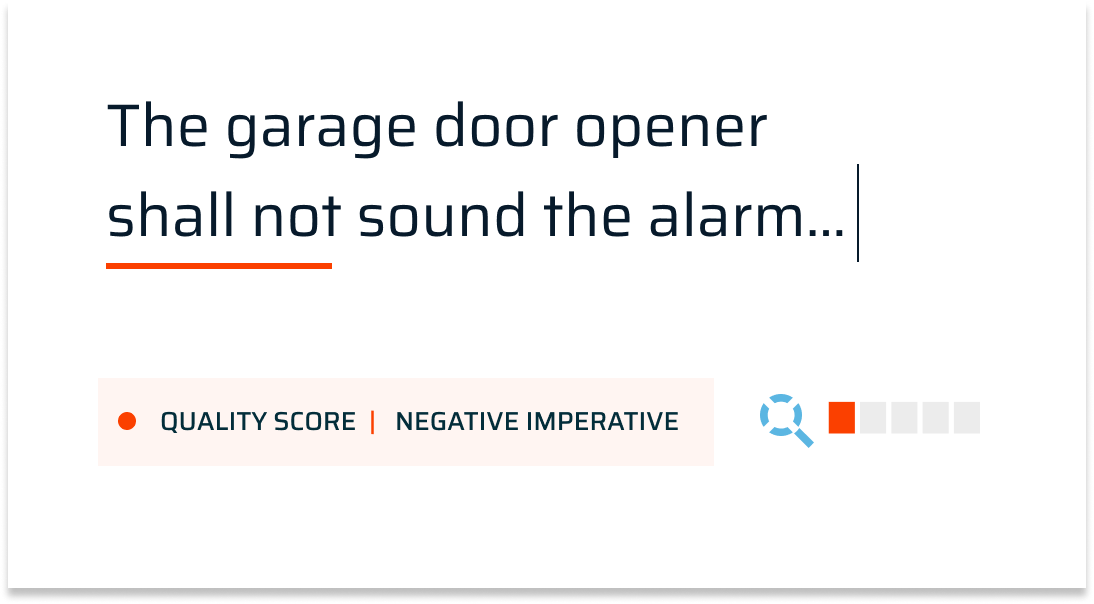
The fix happens right there
ReqWriter proposes a standards-conformant rewrite beside the original, with every change highlighted. The engineer accepts or rejects; nothing changes silently, and the score moves in real time.
Evidence accumulates as you work
Every score carries its reasoning: the rule, the configuration version, the engine version. Snapshots and Timelines build a defensible history as a byproduct of the work.
The Separation Principle: the system that writes is never the system that grades. ReqWriter is generative; it writes. QVscribe is a deterministic engine; it grades: same input, same score, every time. That separation is what makes a score you can put in front of an auditor.
"You have the generative aspect to generate requirements, but then you also have the judge to actually measure the quality. Those two should be two different things." — Systems Engineer, Medtech
Engineering work and its evidence, as a single act.
We call it Continuous Engineering Assurance: instead of building first and proving later, assurance happens as the work is authored. Requirements are where we start, because that's where intent begins and where certification evidence is won or lost. We're building outward from there, across the engineering lifecycle. Follow where it goes →
Assess today
Each requirement scored against your standards, inline, with the reasoning attached.
Reconcile in part
Consistency checked across your set: controlled vocabulary, units, near-duplicates. Full semantic reconciliation is on the roadmap.
Evidence today
A versioned, auditable record accumulates as a byproduct of the work, not a project after it.
Completeness roadmap
Judging whether a set is missing anything, and reconciling requirements against models, code, and tests: where we're headed next.
Five capabilities. One platform. Your existing tools.
Buy the QRA Platform and get all of it, with no rip-and-replace. QVscribe does the judging; the rest make sure your standard is encoded, your fixes are on rails, your history is provable, and your pipeline is covered.
QVscribe
Scores every requirement 1–5 against your standard: 19 checks across clarity, testability, structure, and consistency, with EARS and INCOSE conformance. Each finding maps to the exact text that triggered it.
ReqWriter
Standards-guided rewrites beside the original, with each change marked. Generative AI on rails: you accept or reject, and the engine re-scores the result.
Configurations + Glossary
One size fits none. Your rules and controlled vocabulary, versioned and shared through managed groups, so a house standard holds while each program tunes its own.
Snapshots + Timelines
Immutable, content-hashed records of what a requirement set said and scored at any moment, plus live score history you can re-run under a new rubric.
QVscribe API
The same deterministic analysis in your CI/CD pipeline and agentic workflows, so assurance runs continuously instead of at review time.
QVscribe is the engine: it does the scoring. ReqWriter and the rest help you act on what it finds.
Built for the standards you're certified against.
The domain judgment is in the engine. Start where your framework lives.
Aerospace & Defense
Decomposition, derivation, and traceability that hold across long-lifecycle programs, with a record that holds up at every design review and gate.
Medical Devices
Requirements quality as a compliance obligation — the object your design history file is built on, ready when the audit clock starts.
Energy — Oil & Gas and Power
Specification authoring and governance at scale, across a multi-decade specification surface — without silently nullifying the standard you cite.
Automotive & Mobility
Functional-safety quality at punishing volume — turning unstructured OEM inputs into clean, consistent, EARS-conformant requirements.
What our customers say.
The outcomes teams report once QVscribe is part of the requirements workflow.
"We were able to move from red to green. Within 2 weeks."
Requirements Team, Global Energy MajorEstimated savings on one program's lifecycle, presented internally to justify expanded access.
Requirements Lead, Automotive"It's fully bedded in, everybody's using it, everybody's very happy with the service that it's providing."
Systems Team, Rail Operator"They like using ChatGPT, but personally I have to check it all again. Whereas with QVscribe you only show me what's wrong with it. That's my big seller." Specification Lead, Energy
The answers your security, procurement, and integration reviewers ask for first.
The fit with your stack, the deployment posture, and what QRA does today: the things reviewers check first.
Fits your stack
- IBM DOORS Next
- Siemens Polarion
- Jama Connect
- Microsoft Word & Excel add-ins
- REST API for pipelines & automation
Clears the top gates
- Data residency / in-region hosting
- Enterprise SSO (Azure AD B2C, OIDC, LDAP/AD)
- Read-only sync — no service accounts
- Uses the engineer's existing session, not separate credentials
Need the full security and deployment detail? Just ask.
What QRA does today
- Quality — every requirement scored against your standards
- Consistency — checked across the requirement set
- Conformity — EARS, INCOSE, and your own rules
- Similarity — near-duplicate and overlap detection
Scoped to requirements today — the roadmap widens from there.
Built by engineers who know what "audit-ready" means.
QRA's quality engine, QWL, is purpose-built for the linguistic analysis regulated requirements demand, not a wrapper on a general-purpose model. The company was founded on requirements-quality research and has spent years earning the trust of aerospace, defense, medical, energy, and automotive engineering teams.
QRA is led by co-founder and CEO Jordan Kyriakidis, Ph.D., a quantum theorist with nearly 20 years leading high-performance research and engineering teams, alongside leadership spanning engineering, operations, and sales. The team works from first principles: understand the why, break the problem into its building blocks, and reassemble them in new ways.
Meet the team →Common questions, answered plainly.
The short answers.
What does the QRA Platform do?
The QRA Platform analyzes and improves engineering requirements as they are written. QVscribe evaluates each requirement against your standards using deterministic scoring, so the same input under the same configuration produces the same result every time. ReqWriter proposes rewrites that QVscribe scores independently. The platform keeps a record of what was checked and which configuration was used.
Does QRA use AI to write our requirements?
ReqWriter uses AI to propose rewrites of requirements you already have. An engineer decides what stays, and every accepted change is re-scored by QVscribe, which operates independently of the rewrite process.
Which tools does it work in?
The QRA Platform supports Microsoft Word and Excel through a task-pane add-in, and IBM DOORS Next, Siemens Polarion, and Jama Connect through a browser extension. Requirements can also be analyzed through the web interface.
Is it safe to connect to our requirements system?
Sync with supported requirements systems is read-only and never writes back to the source system. The browser extension uses the engineer’s existing session and permissions, so there are no separate service accounts.
Which standards does it support?
QVscribe includes built-in checks for EARS conformance and requirements quality based on INCOSE guidance. Configurations can also include your organization’s own rules, approved glossary terms, and units, so requirements are evaluated against your standards rather than a fixed rubric.
Is this a requirements management tool?
No. Your requirements stay where they live today. The QRA Platform analyzes the quality of the requirements themselves, scoring each one, identifying the specific words and patterns behind the findings, and keeping a record of what was checked.
Is there an audit trail for compliance programs?
Yes. Every result carries the requirement text, score, findings, and the configuration and engine versions behind it. Snapshots capture the scored state of a document, and timelines show how requirements quality changed between project gates, giving teams a record for design reviews and audits.
What security and compliance standards does QRA follow?
QRA follows security practices informed by the OWASP Top 10 and is working toward ISO 27001 certification. Sync with supported requirements systems is read-only and uses the engineer’s existing permissions. Deployment and security details depend on your environment, and your security reviewer is welcome to join a demo.
How do configurations work across teams and projects?
Configurations are named, versioned, and shared across teams and projects. Organizations can designate internal configuration authors who are responsible for maintaining and updating configurations, defining the standards each one applies, and establishing when to use each version. Our Customer Success team provides training to help configuration authors manage updates and establish a process that works for their organization. The record shows which configuration version was used for each result.
Which industries use it?
The QRA Platform supports teams building mission- and safety-critical systems in aerospace and defense, medical devices, automotive, semiconductors, and energy.
How do we evaluate it?
Book a call and bring a requirement you already know is weak. You’ll see it scored, rewritten, and re-scored on the spot.
See the QRA Platform on your own requirements.
Book a live walkthrough, matched to your standards and your tools.
Where Continuous Engineering Assurance goes next: new capabilities and the Requirements Operating Model as it releases, plus the chance to shape the roadmap, every two weeks. Not ready to talk? Start here.
Subscribe to the Signal